
Finding Georgetown Resident Records
Match the record to the question. An address points first to the Williamson County GIS address tool and then to the Williamson Central Appraisal District, or WCAD. A name can be tested against the county voter lookup, a court party search, or the Clerk's official-records index. Each source answers something narrow. A property card names an owner or taxpayer, not every person at the house. A deed records the parties to an ownership transfer. Voter records carry display limits and protections. Two independent matches beat one result every time. Older Georgetown names call for different tools. The Georgetown Public Library's Texas History Room, the Williamson County Genealogical Society, and the Texas State Library and Archives Commission (TSLAC) all hold historical material. TSLAC's Williamson guide lists deed, marriage, probate, tax-roll, and court records on microfilm. The Clerk warns that staff cannot run searches for you. Bring a name, a date, a legal description, or a document number, and work the indexes yourself.
- Use the county GIS address lookup to check the jurisdiction and select the right address from its suggestions.
- Search WCAD by owner, address, account number, property ID, or legal description, then save the parcel identifiers.
- Use the County Clerk's record links for a deed, lien, plat, probate, or related instrument lead.
- Check the voter lookup or court system only as a separate, public-record confirmation of the right person or case role.
- For an older household or an inaccessible online record, use the library, TSLAC microfilm, or a written Texas Public Information Act request to the holding agency.
Georgetown Records Offices for Residents
Georgetown's county-seat role makes office boundaries matter. The Williamson County Clerk records real-estate instruments, plats, assumed names, probate, and marriage licenses. The same office handles local birth and death registrations. It also records several court record types. WCAD keeps the public property card and the tax-roll side of each parcel. Elections handles registration and the county lookup. The County Public Records Center routes many other county requests. Want to trace one address down a whole street? The Georgetown by-street directory offers a deeper path.
Williamson County Clerk
1848 Texas Trail
Georgetown, TX 78626
512-943-1515
Williamson Central Appraisal District
County property roll
Georgetown and Williamson County parcels
Public web search
Williamson County Elections
County registration services
Georgetown, Texas
County lookup route
Search Georgetown Parcels in WCAD
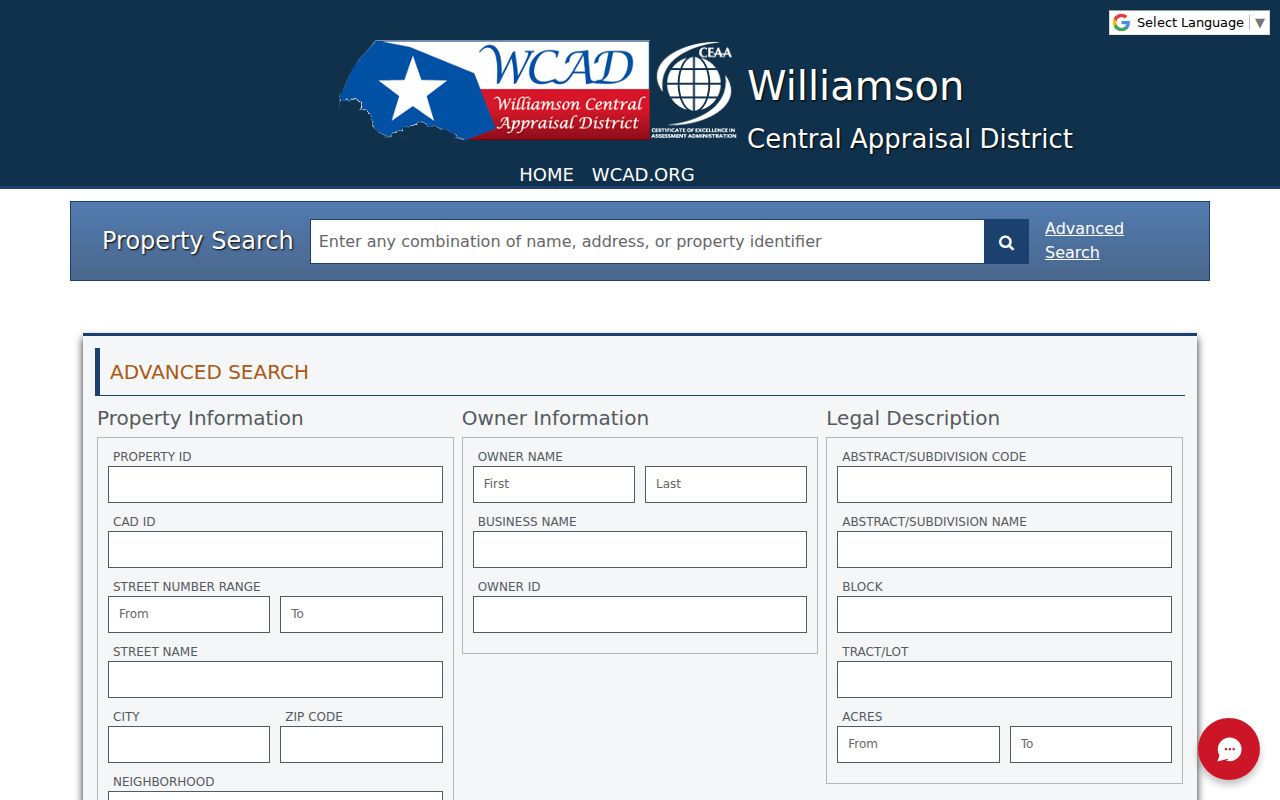
For a current Georgetown parcel, the WCAD Advanced Search is the place to begin. It splits address, owner, and legal-description questions into separate paths. Fields include street number range, street name, city, and ZIP Code. Owner name, account or property ID, subdivision, property type, status, and tax year are also options. None of the controls are marked as required. Tax-year choices shift with the live interface. Keep in mind that each search returns a property record. It is not a roster of Georgetown residents.
| WCAD field | Useful for | Limit |
|---|---|---|
| Owner | Finding a taxpayer or legal owner | Owner may not occupy the parcel |
| Street number and name | Finding a situs address or range | Address must match the tax roll |
| City and ZIP Code | Narrowing parcel results | Postal ZIP is not a city-limit test |
| Subdivision or legal description | Connecting an older deed or plat | Terms can differ from a modern street name |
The WCAD search form displays the owner, address, city, ZIP, subdivision, property-type, and tax-year controls used to narrow a Georgetown parcel search.
After a parcel turns up, save the account, legal description, and situs address before moving to deeds or maps. A mailing address can differ from the situs. Treat it as a lead for more checking, never as proof of where someone lives.
Use Georgetown GIS Before Names
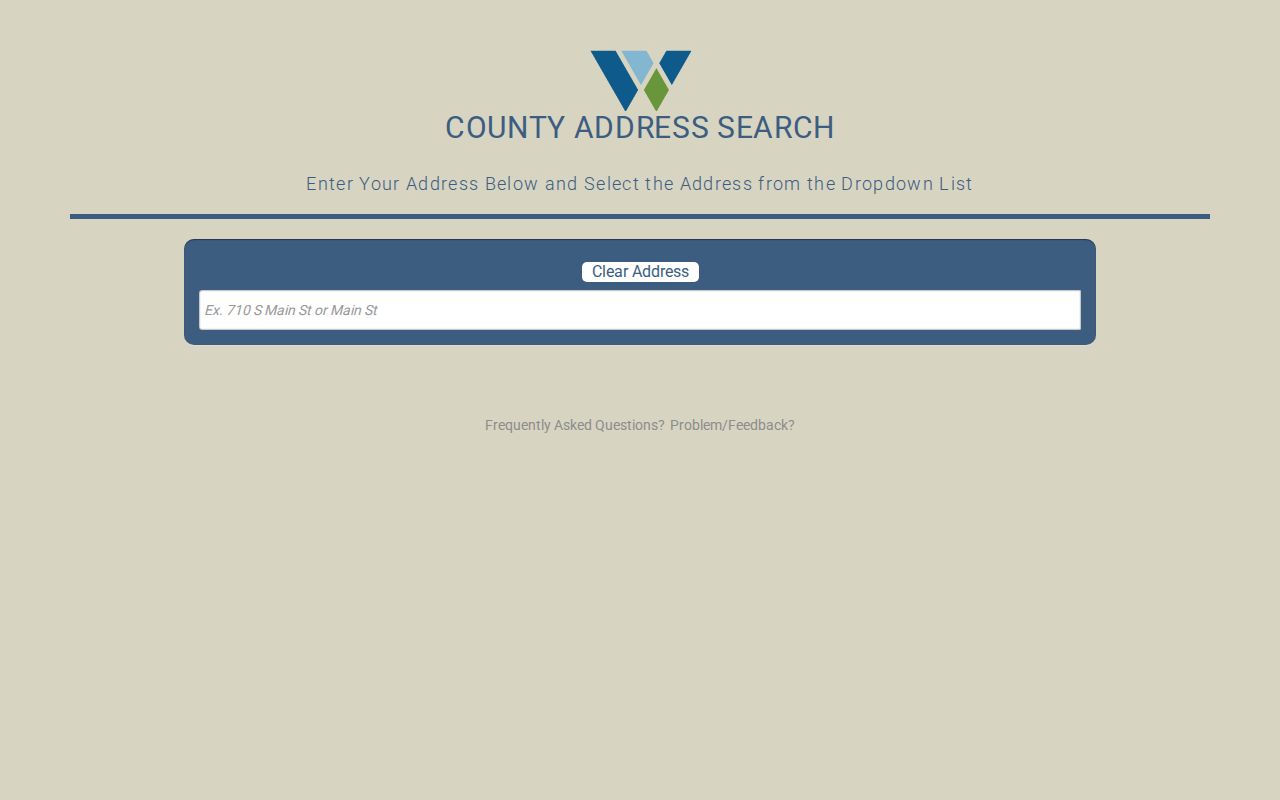
An address near a city, county, or ETJ boundary can be tricky. Williamson County's address lookup is the tool to try. Type an address and pick from the matches. County search tips suggest entering the street number and the first word of the street name when the full address fails. Choose the right directional road from the dropdown. The county map tools layer on district and jurisdiction detail. Georgetown's municipal GIS adds separate city-limit, planning, and utility layers. The County GIS address-lookup screen shows the interface a visitor will meet. It settles jurisdiction questions, not ZIP-wide or household ones.
Use the jurisdiction result to choose the next custodian, whether a city file, a county office, or another holder. That step matters. A Georgetown postal address can sit outside the incorporated city.
Georgetown Deeds Link Owner History
A parcel card's sales history can hand you a seller, a buyer, an instrument number, and a date. Use those details for a sharper Clerk search. The County's Search Records hub routes you to the official-records paths. The Kofile search shell offers grantor or grantee, subdivision, document type, document number, and recorded-date controls. It also offers index-only or OCR full-text modes. It does not guarantee a complete portal result, so assume no online starting year. TSLAC's Williamson County guide confirms historical deed series going back to 1848. That microfilm is the fallback when a current index cannot answer an older question. Grantor means the party transferring an interest; grantee means the one receiving it. Both names trace an ownership trail rather than current residency.
Current Georgetown Resident Directories
No office publishes one master list of Georgetown residents. Several official sources each capture a different link. One may tie a name to a place, a transaction, or a registration. The table keeps those apart, so an owner, a registered voter, a party to a recorded instrument, and a community contact stay distinct. A missing name can mean several things. It may signal a protected address, an ownership change, a private household role, or a gap in the index.
| Source | Who It Lists | Keeper | Access |
|---|---|---|---|
| WCAD property roll | Owners and tax-card details | Williamson CAD | Free public search |
| Voter lookup | Publicly displayable registration information | Williamson Elections | Protected records excluded |
| Official-records index | Grantors, grantees, and instrument parties | County Clerk | Portal or counter route |
| Judicial Records | Public case parties and case leads | County and district courts | Restrictions and portal gaps apply |
| Community resources | Association or historical organization contacts | City GIS and local groups | Not an all-member roster |
Sometimes the goal is one name, not a whole system. A Georgetown resident lookup works best from an address. It can also start from an ownership tie. Then find a second public match. Reading the current directory sources side by side gives better footing. None of them substitutes for certified records from the records office that owns the file.
Check Georgetown Voter Registration Carefully
Need to confirm a voter in Georgetown? The Williamson County voter lookup and the statewide VoteTexas route both work. They return results when details are publicly displayed. They can confirm registration status, a precinct, and address information. But the picture is incomplete by design. Texas never registers voters by party, and ballot choices stay out of any residents directory. Some names are hidden through a county opt-out. The Texas Address Confidentiality Program protects others behind a substitute address. A missing name or an asterisked address in the Georgetown residents directory proves nothing about where someone actually lives.
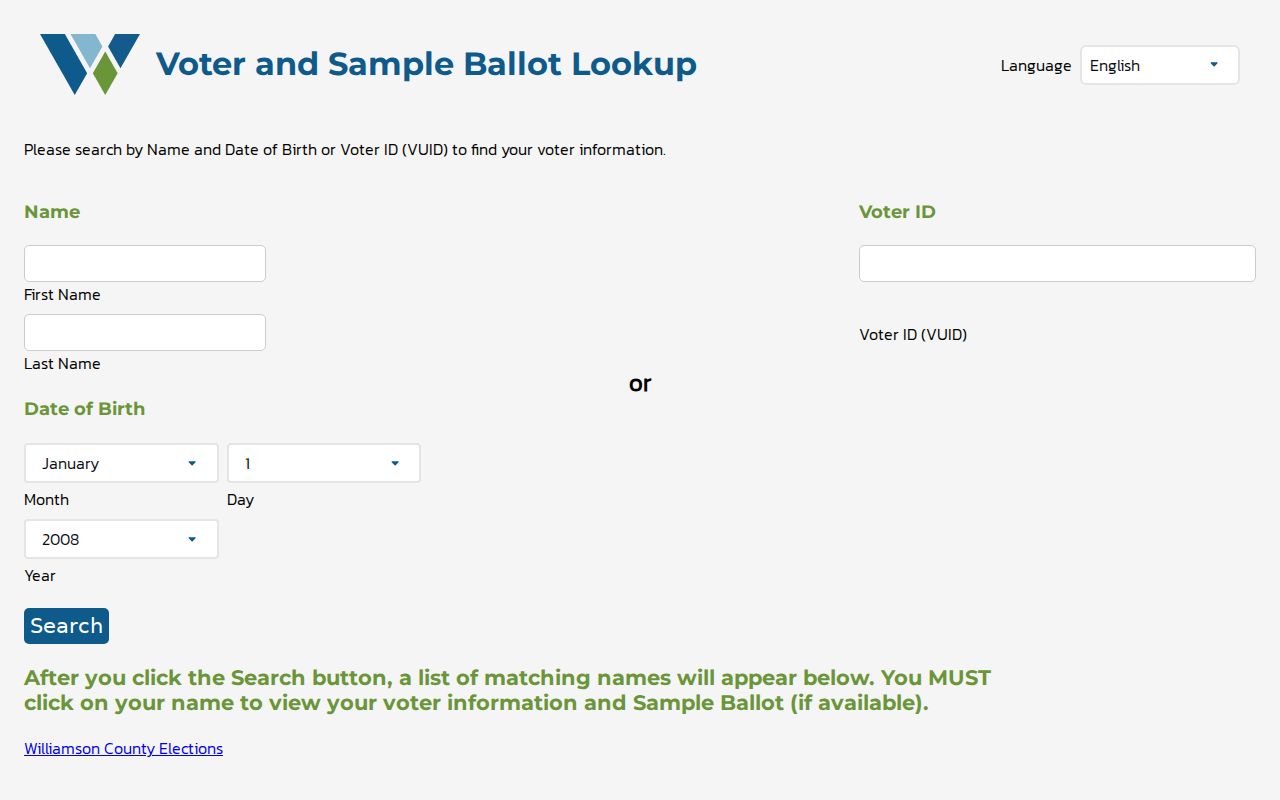
The county lookup entry screen shows the person-oriented design. It is a resident lookup, not a street directory. No public street-by-street or ZIP-wide roster comes out of it.
Corrections and display questions go through the elections office. The opt-out form hides a name from website and SOS display. It does not erase the official registration record, which stays open to Texas Public Information Act requests.
Match Georgetown Names to Court Records
Court files can anchor a Georgetown name to real events. Williamson County pulls civil, family, probate, criminal, and jail searches together. Its Court Case page is the hub. The Judicial Records help page spells out the options. You can search by case, party, or attorney, and several calendar modes exist too. Name searching has its own rules. Soundex catches similar-sounding names. A wildcard handles partial names. The two cannot be combined. A partial first name needs at least one character. A last name does too. A case or cross-reference wildcard demands four non-dash characters minimum.
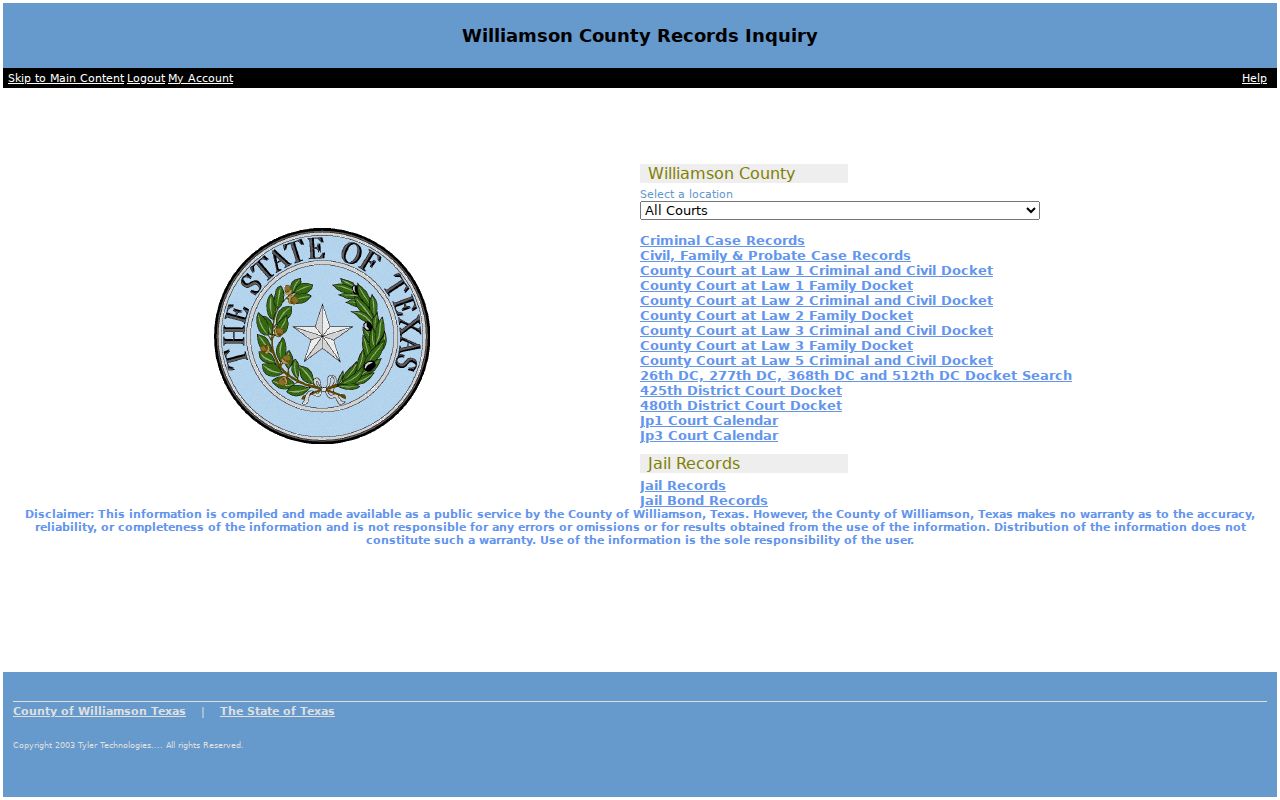
A Williamson court-search page shows the public route itself. The portal redirects repeatedly. Trust the documented help mechanics over guessed result columns or coverage dates.
A court name is only a role in a case. It proves no address and no outcome. Confirm the case number, role, dates, and any disposition with the right clerk, and expect juvenile, sealed, and expunged material to stay off limits.
Georgetown Vital and Prison Records
Vital records lead to old Georgetown households. Each vital record type has its own custodian and access rules. The County Clerk serves as local registrar for birth and death records. It also issues certified marriage licenses. A district clerk handles certified divorce decrees. Texas DSHS covers statewide verifications and eligible certified copies. Government Code Section 552.115 opens birth records after 75 years. It opens death records after 25. That opening stays subject to other confidentiality rules. Recent certified copies stay limited to qualified people with the required interest and identification. For prison records, the TDCJ offender search takes a name, SID, or TDCJ number. It adds prior-number and notification functions. It covers TDCJ custody only, so it cannot stand in for a Georgetown resident search.
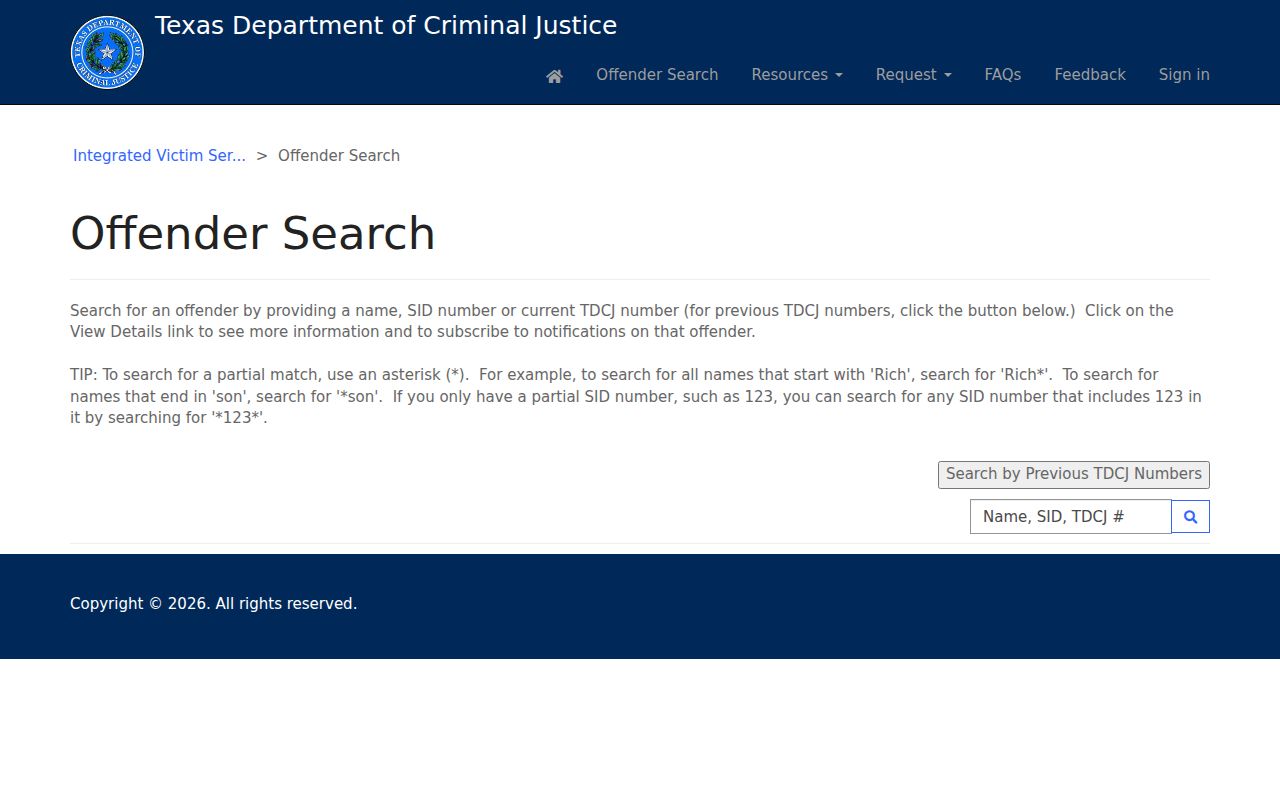
Identity-sensitive results follow the custodian's rules. Use the state or county instructions, respect the listed restrictions, and remember that a public index is not the same as a certified copy.
Request Georgetown Records in Writing
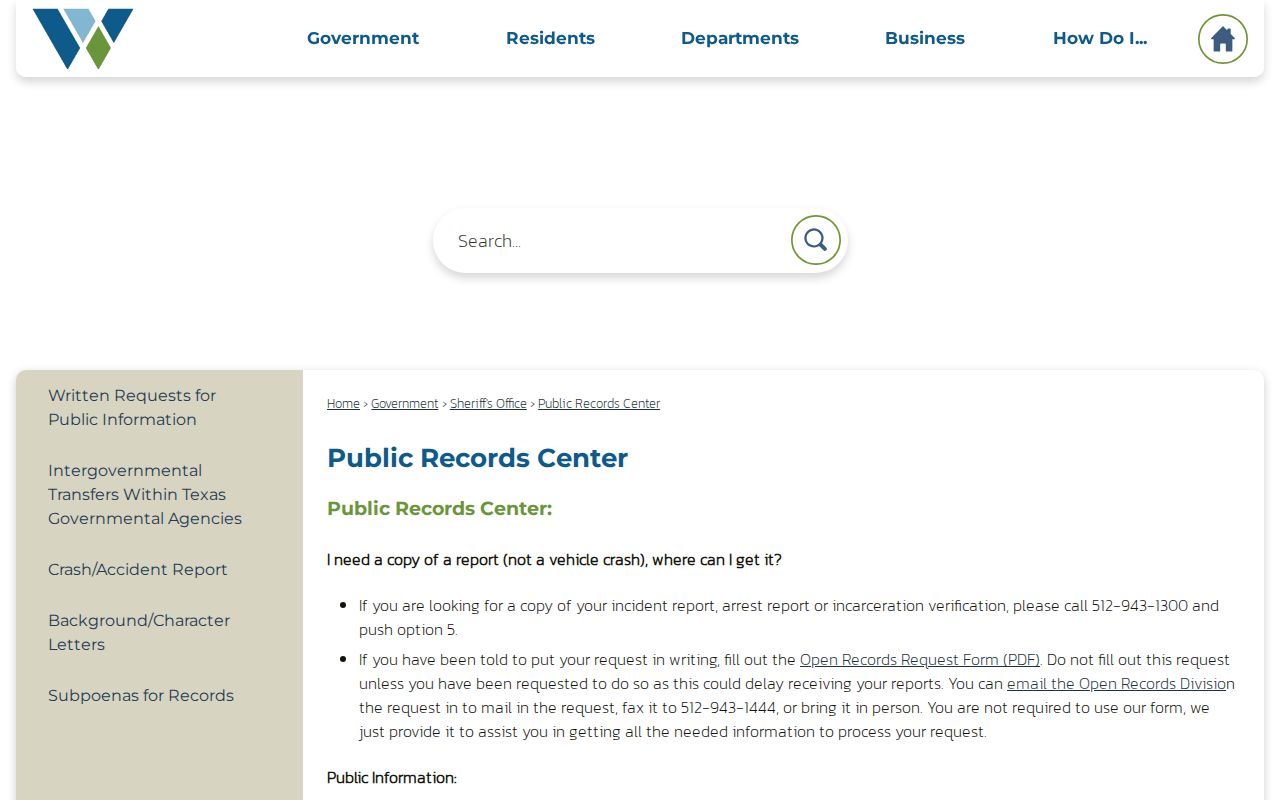
Sometimes no public index holds the answer. Then Williamson County points you to its Public Records Center for written requests. County GIS helps pin down which agency actually holds the records. Sheriff records stay with the Sheriff. Many other county requests go through the County Attorney instead. You can email, mail, fax to 512-943-1444, hand-deliver, or use the county form. The form itself is optional. Verbal requests may still return a public portion, county guidance says. But only a written request triggers the full Texas Public Information Act obligations that make these city directory and property records properly answerable.
The Public Records Center screen displays where every written Georgetown records request gets routed.
State rules allow certain reproduction charges. Any estimate above $40 must be itemized. A strong request names the agency, record type, date range, address or name, and preferred format. Ask for the public portion and redactable fields instead of assuming every field must be released.
Historical Georgetown Resident Directories
Older Georgetown households leave a paper trail scattered across several institutions. No single online run covers it all. The Georgetown Public Library keeps a Texas History Room. It offers local publications, genealogy guidance, and newspaper and census microfilm. Preservation Georgetown points researchers to Texas History Room files. It also lists oral-history books from 1985 to 1987. The Williamson Museum offers catalog, research, and photo-request routes. Its Portal to Texas History partner collection spans thirteen decades. The city directories collection lays out the detailed shelf and entry-reading method for searchers.
A TSLAC guide decodes the entries. Expect a name, address, telephone number, spouse, and sometimes an occupation or owner-renter notation. A criss-cross directory works from address to occupant.
TSLAC keeps its print and microform directories in the Austin Reference Reading Room. Staff generally will not do phone, transcription, or email searches. Verify any volume with the holding institution.
- Roll
- A list created for a particular public purpose, such as property assessment or voter registration.
- Index
- A finding tool that points to a record or image, rather than always being the full record.
- Parcel
- A defined piece of land in the appraisal and deed systems, often tied to an account number and legal description.
- Criss-cross directory
- A reverse directory organized by street and address instead of by a person's name.
Georgetown Records Begin at the Grid
Georgetown took shape in 1848 as the Williamson County seat. Its first lots went up for auction around a 52-block grid centered on a public square, and the Glasscock Addition arrived in 1854. That layout shaped early records. An older Georgetown street directory or deed may describe land by subdivision, block, and lot. It may not use a modern number. TSLAC places Williamson deed records from 1848, marriage records from 1848 to 1934, probate material from 1848, and tax rolls from 1848 to 1910.
Postal geography adds a second moving layer. ZIP 78633 was created in 2007 to take deliveries once served by 78628, and a 2009 bulletin shifted small groups between 78633 and 76527. A Georgetown resident lookup that ignores those changes can invent gaps where none exist. Save the situs address, mailing address, legal description, and postal ZIP alongside every dated record. That habit keeps an old source from becoming a dead end.
Growth raises the stakes. Census QuickFacts counted 67,176 residents in 2020 and estimated 101,344 by 2024, though neither figure works as a usable resident list. The city, its ETJ, and nearby county pockets can all carry a Georgetown mailing city. Before tying a name to a place in the residents directory, check the county GIS jurisdiction result and the WCAD parcel card. The date on each record matters just as much as the name on it.
When the trail runs older than any web portal, the TSLAC Williamson County guide offers a concrete archival route. It lists direct deed indexes from 1848. It lists reverse indexes from 1848 as well. Deed-of-trust records start in 1880. Marriage records run from 1848 to 1934. Probate papers date from 1848, and tax rolls cover 1848 to 1910. Naturalization and delayed-birth material appears there too. Not every series proves residence. Yet each can surface a recorded transaction, a family tie, or a property reference. Any of these can bridge a dated Georgetown address.
Neither the Tyler nor the Kofile system publishes a stated cutoff for online recording. Where the digital trail stops, the County Clerk counter and research library remain, along with TSLAC microfilm and FamilySearch or interlibrary-loan routes. TSLAC cannot issue certified copies. Those must come from the local custodian. Keeping the online index separate from the archival series prevents one common mistake. That mistake is treating an empty web result as proof that a record never existed.
Keep a short log for any Georgetown records office visit or search. Note the source URL or shelf, the access date, and the exact names or parcel terms tried. A log like that lets you revisit a changing portal. It also lets you compare a later scan or ask the recorder a focused question. Just avoid overstating an early result.
Note: Georgetown postal city, city limits, and the extraterritorial jurisdiction can diverge. Use County GIS and city GIS before assigning an agency or a record custodian.