
Finding Georgetown Resident Records
Start with the record tied most closely to the fact you need to check. An address usually goes first to the Williamson County GIS address tool and then to the Williamson Central Appraisal District, known as WCAD. A name can be tested against the county voter lookup, a court party search, or the Clerk's official-records index. Each source answers a smaller question. A property card identifies an owner or taxpayer, not every person living there. A deed places parties in an ownership transaction. A voter record is subject to protections and display limits. Matching two independent records is safer than relying on one result.
For older Georgetown names, shift from current portals to the Georgetown Public Library's Texas History Room, the Williamson County Genealogical Society, and the Texas State Library and Archives Commission, or TSLAC. TSLAC's Williamson guide identifies deed, marriage, probate, tax-roll, and court material on microfilm. The Clerk warns that staff cannot conduct searches, so bring a name, date, legal description, or document number and use the available indexes.
- Use the county GIS address lookup to check the jurisdiction and select the right address from its suggestions.
- Search WCAD by owner, address, account number, property ID, or legal description, then save the parcel identifiers.
- Use the County Clerk's record links for a deed, lien, plat, probate, or related instrument lead.
- Check the voter lookup or court system only as a separate, public-record confirmation of the right person or case role.
- For an older household or an inaccessible online record, use the library, TSLAC microfilm, or a written Texas Public Information Act request to the holding agency.
Georgetown Records Offices for Residents
Georgetown's county-seat role makes the office distinction especially important. The Williamson County Clerk records real-estate instruments, plats, assumed names, probate, marriage licenses, local birth and death registrations, and several court record types. WCAD maintains the public property card and tax-roll side of a parcel. Elections maintains registration processes and the county lookup. The County Public Records Center routes many other county requests. For a chain that starts with one address and runs along a whole street, use the more detailed Georgetown by-street directory approach.
Williamson County Clerk
1848 Texas Trail
Georgetown, TX 78626
512-943-1515
Williamson Central Appraisal District
County property roll
Georgetown and Williamson County parcels
Public web search
Williamson County Elections
County registration services
Georgetown, Texas
County lookup route
Search Georgetown Parcels in WCAD
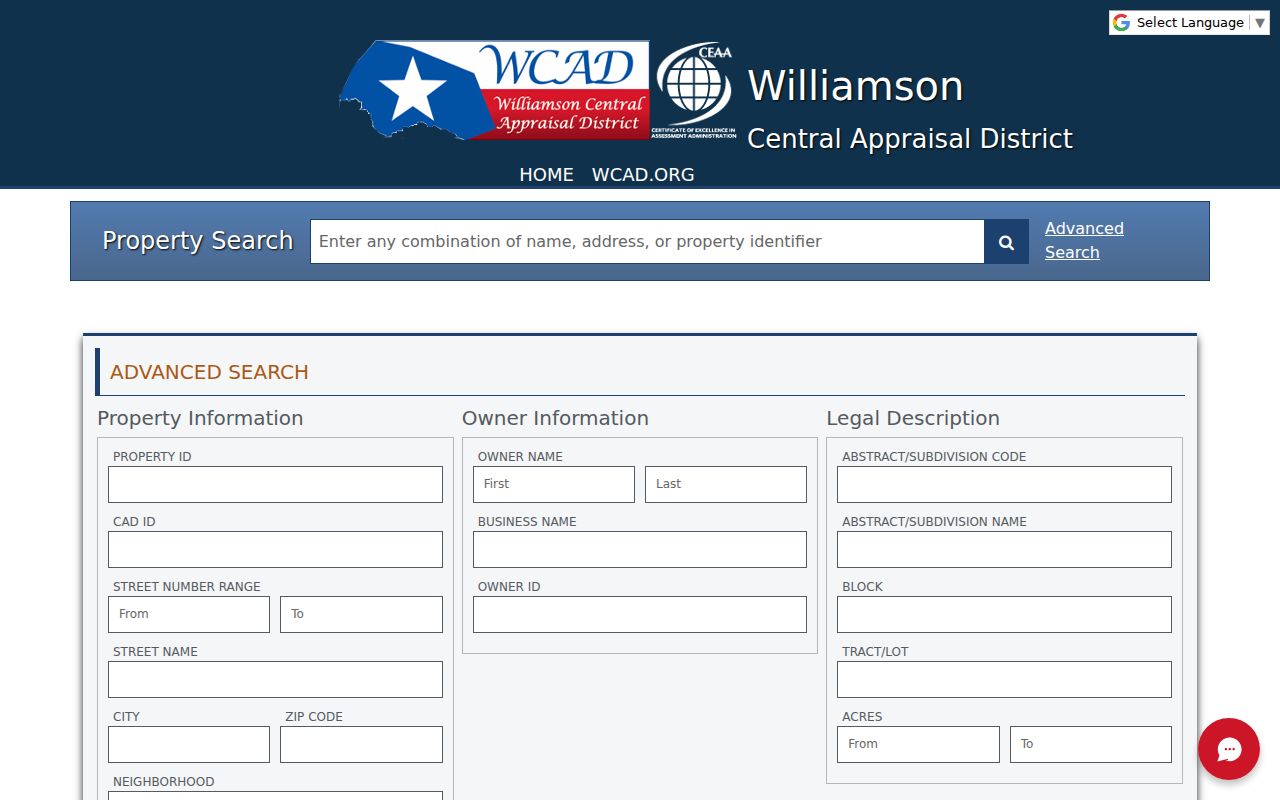
The WCAD Advanced Search is the strongest current starting point when an address or owner name is known. Its form separates address, owner, and legal-description questions. Available fields include street number range, street name, city, ZIP Code, owner name, account or property ID, subdivision, property type, status, and tax year. The form did not mark these controls as required during research, and the tax-year choices change with the live interface. A search return is a property record, not a complete roster of Georgetown residents.
| WCAD field | Useful for | Limit |
|---|---|---|
| Owner | Finding a taxpayer or legal owner | Owner may not occupy the parcel |
| Street number and name | Finding a situs address or range | Address must match the tax roll |
| City and ZIP Code | Narrowing parcel results | Postal ZIP is not a city-limit test |
| Subdivision or legal description | Connecting an older deed or plat | Terms can differ from a modern street name |
The WCAD search form shows the owner, address, city, ZIP, subdivision, property-type, and tax-year controls used to narrow a Georgetown parcel search.
Once a parcel is found, retain the account, legal description, and situs address before opening deeds or maps. A mailing address can differ from the situs, so it is a lead for more checking, not proof of where a person lives.
Use Georgetown GIS Before Names
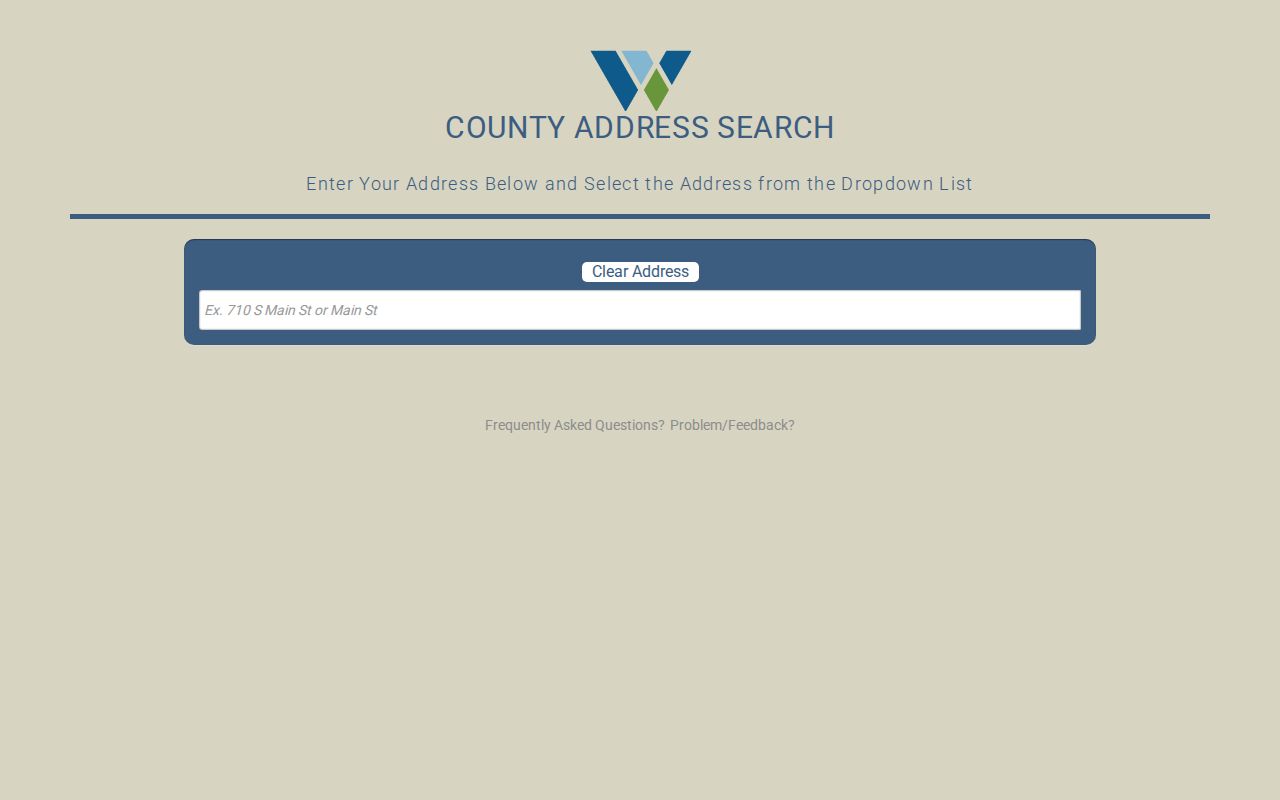
Williamson County's address lookup is useful when an address crosses a city, county, or ETJ boundary. The visible interface accepts an address and presents matching choices. County search tips call for the street number and first street-name word when the full address does not match, and they advise choosing the correct directional road from the dropdown. The county map tools add district and jurisdiction context. Georgetown's municipal GIS services supply separate city-limit, planning, utility, and other layers.
The county address-lookup screen is shown by this County GIS capture. It is an address and jurisdiction tool, not a ZIP-wide or household search.
Use the jurisdiction result to decide whether a city file, county office, or another custodian is more likely to hold the next record. That step matters because a Georgetown postal address can sit outside the incorporated city.
Georgetown Deeds Link Owner History
A parcel card's sales history can supply a seller, buyer, instrument number, and date for a more focused Clerk search. The County's Search Records hub directs users to official-records routes. The alternative Kofile search shell identifies grantor or grantee, subdivision, document type, document number, recorded-date controls, and index-only or OCR full-text modes. The research browser could not complete a reliable portal result, so an online beginning year should not be assumed.
TSLAC's Williamson County guide verifies that historical deed series begin in 1848. Its microfilm material is the fallback when a current index does not answer an older question. Grantor means the party transferring an interest; grantee means the party receiving it. Both names are ownership-trail clues rather than a present-residency finding.
Current Georgetown Resident Directories
No office publishes a single list of every Georgetown resident. Instead, several official sources each identify a different relationship to a place, transaction, or registration. The table separates the sources so an owner, a registered voter, a party to a recorded instrument, or a community contact is not mistaken for the same thing. A missing name can reflect a protected address, an ownership change, a private household role, or an index gap.
| Source | Who It Lists | Keeper | Access |
|---|---|---|---|
| WCAD property roll | Owners and tax-card details | Williamson CAD | Free public search |
| Voter lookup | Publicly displayable registration information | Williamson Elections | Protected records excluded |
| Official-records index | Grantors, grantees, and instrument parties | County Clerk | Portal or counter route |
| Judicial Records | Public case parties and case leads | County and district courts | Restrictions and portal gaps apply |
| Community resources | Association or historical organization contacts | City GIS and local groups | Not an all-member roster |
When the task is to verify one person rather than understand a record system, a Georgetown resident lookup should begin with an address or ownership connection and then seek an independent public match. The current directory sources work best when read together, not as a substitute for official certified records.
Check Georgetown Voter Registration Carefully
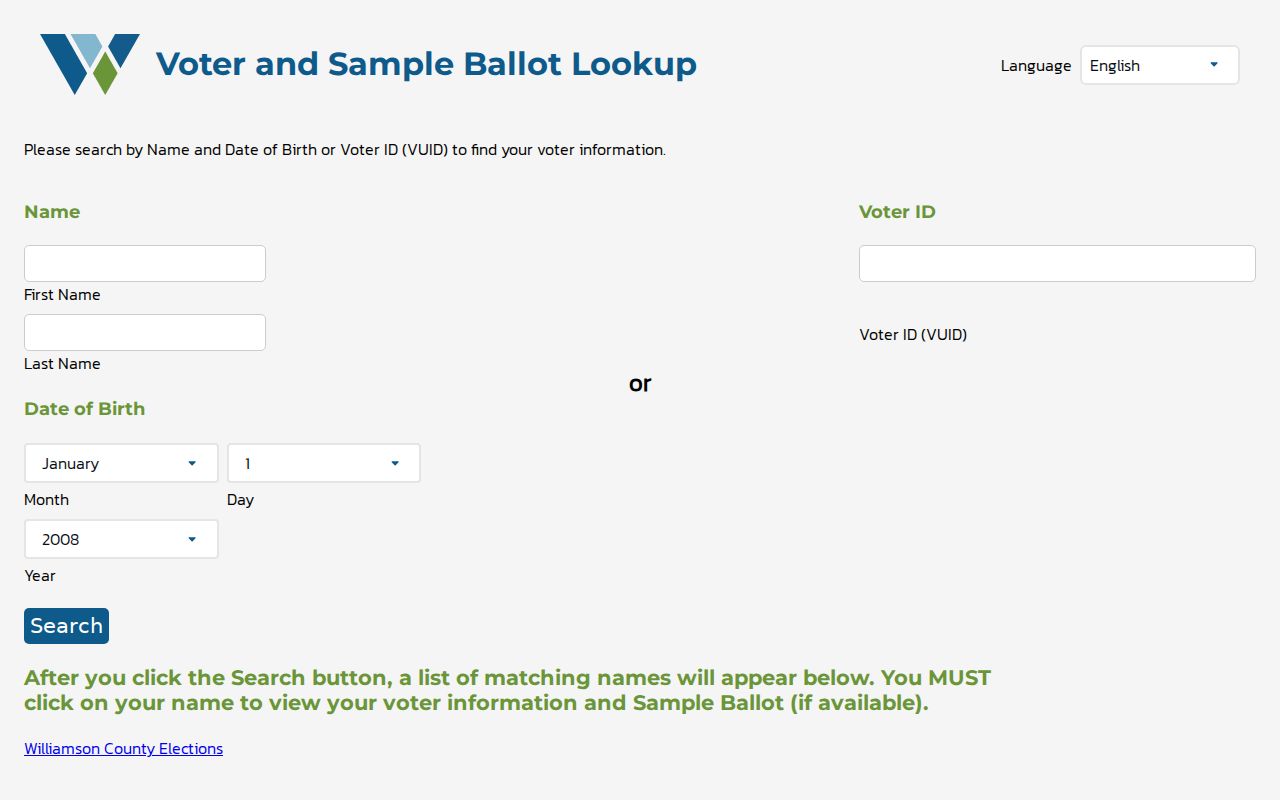
The Williamson County voter lookup and the statewide VoteTexas route can help confirm registration status, precinct, and address information when it is publicly displayed. Texas does not register voters by party, and ballot choices are not public resident-directory fields. A voter name may be omitted from display through the county opt-out process or protected through the Texas Address Confidentiality Program. Do not treat an absence, a substitute address, or an asterisked address as proof that someone does not live in Georgetown.
The county lookup entry screen illustrates the person-oriented voter route. It does not establish a public street-by-street or ZIP-wide roster.
For a correction or display question, use the elections office process. The county's opt-out form removes website and SOS display, but it does not erase the official registration record from all Texas Public Information Act access.
Match Georgetown Names to Court Records
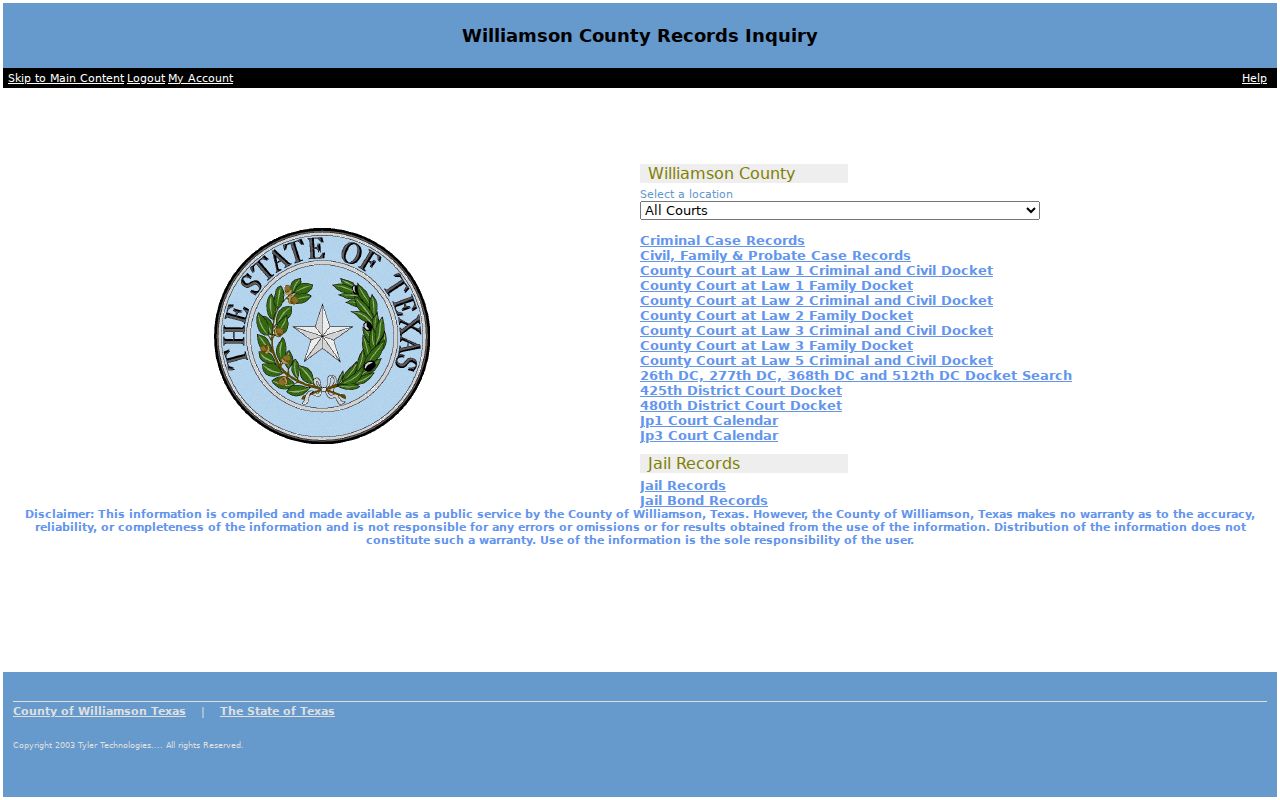
Williamson County links civil, family, probate, criminal, and jail routes through its Court Case page. The Judicial Records help page documents searches by case, party, attorney, and several calendar modes. It also permits Soundex for similar-sounding names or a wildcard for partial names, but not both at once. For a partial first name, at least one character is required; for a last name, at least one; and a case or cross-reference wildcard needs at least four non-dash characters.
A Williamson court-search capture accompanies the public route. The live portal redirected repeatedly during research, so its visible help mechanics are safer than invented result columns or coverage dates.
A court name is a role in a case, not evidence of current address, responsibility, or outcome. Check the case number, role, dates, and available disposition with the appropriate clerk, and expect juvenile, sealed, expunged, and protected material to remain limited.
Georgetown Vital and Prison Records
Birth, death, marriage, and divorce records have different custodians and access rules. The County Clerk is the local registrar for local birth and death work and the certified marriage-license source. A district clerk issues certified divorce decrees. Texas DSHS issues statewide verifications and eligible certified records. Texas Government Code Section 552.115 opens birth records after 75 years and death records after 25 years, subject to other confidentiality rules. Recent certified copies remain limited to qualified people with the required interest and identification.
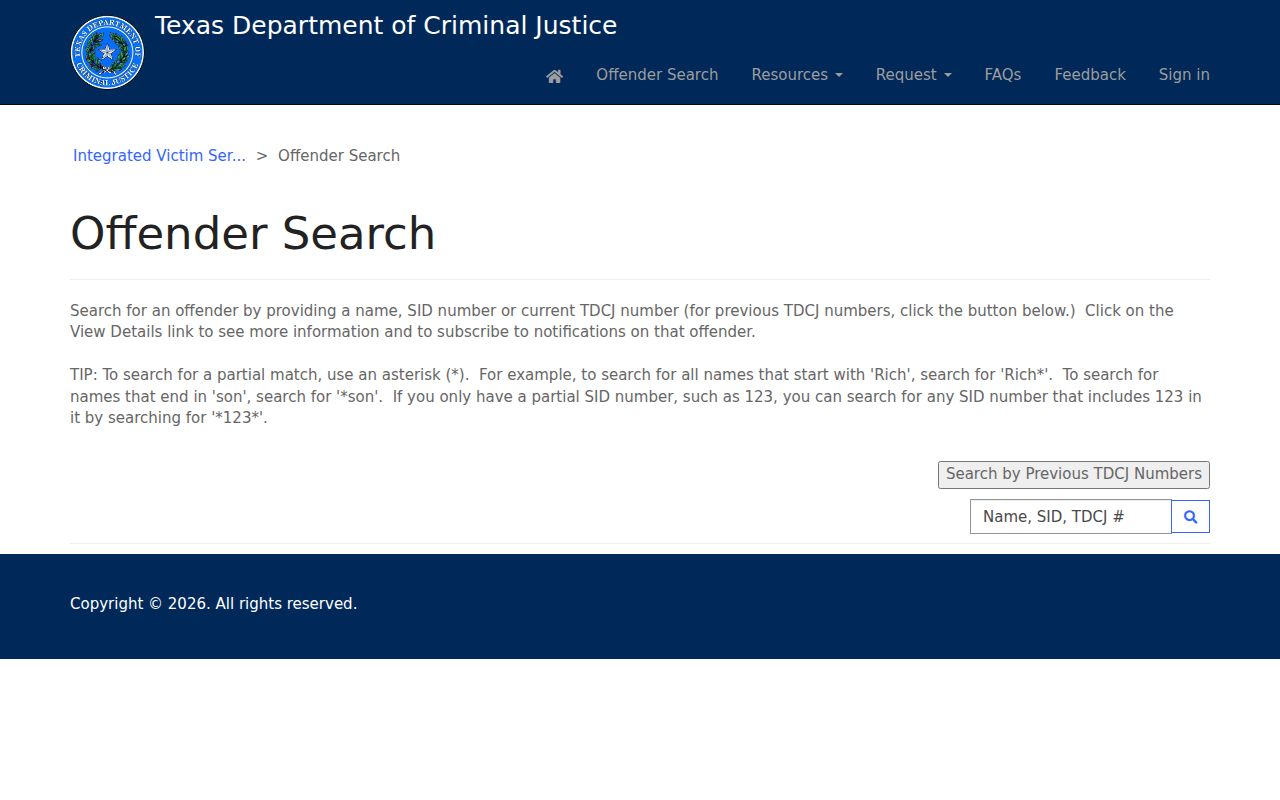
The state also provides the TDCJ offender search, which accepts a name, SID, or current TDCJ number and includes prior-number and notification functions. It concerns TDCJ custody only, so it cannot stand in for a Georgetown resident search.
For any identity-sensitive result, use the state or county custodian's instructions and respect the listed restrictions. A public index is not the same as a certified copy.
Request Georgetown Records in Writing
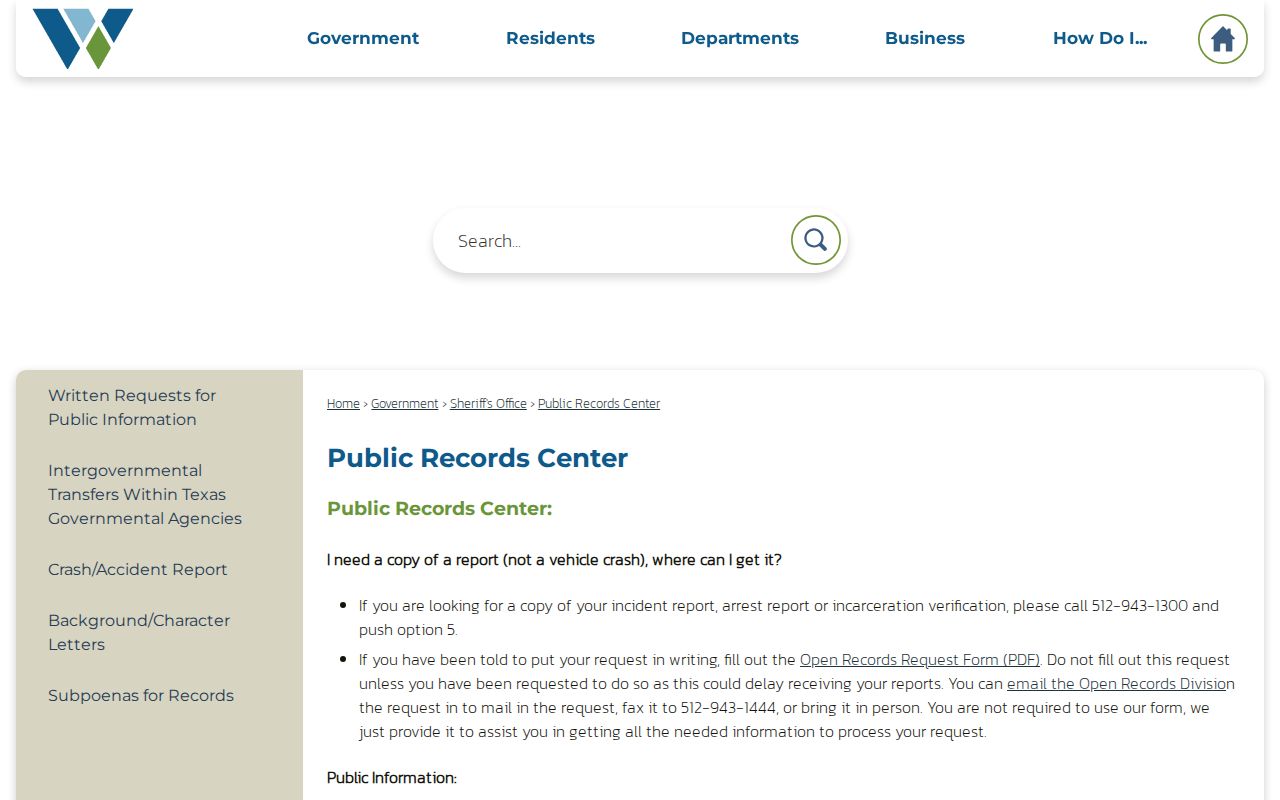
When no public index answers the question, Williamson County directs users to its Public Records Center. County GIS can help identify the responsible agency. Sheriff records remain with the Sheriff, while many other county requests route through the County Attorney. A request may be emailed, mailed, faxed to 512-943-1444, hand-delivered, or submitted on the county form. The form is not required. County guidance says verbal requests may receive a public portion, but a written request triggers Texas Public Information Act obligations.
The Public Records Center screen shows the county's routing point for written requests.
State guidance allows certain reproduction charges and requires an itemized estimate when estimated costs exceed $40. Name the agency, record type, date range, address or name, and preferred format. Ask for the public portion and redactable fields rather than assuming every field must be released.
Historical Georgetown Resident Directories
Georgetown's older household trail is held in several places rather than one online run. The Georgetown Public Library has a Texas History Room, local publications, genealogy guidance, and reported newspaper and census microfilm. Preservation Georgetown points to Texas History Room files and 1985-1987 oral-history books. The Williamson Museum has catalog, research, and photo-request routes, while its Portal to Texas History partner collection had material across thirteen decades at the time of research. The city directories collection holds the detailed shelf and entry-reading method.
TSLAC's city-directory guide explains that an entry can include a name, address, telephone number, spouse, and sometimes occupation or owner-renter notation. A reverse, or criss-cross, directory turns an address into an occupant lead. TSLAC holds its print and microform directories in the Austin Reference Reading Room and generally does not perform phone, transcription, or email searches. Local Georgetown directory year runs were not confirmed online, so verify a catalog result or volume at the holding institution.
- Roll
- A list created for a particular public purpose, such as property assessment or voter registration.
- Index
- A finding tool that points to a record or image, rather than always being the full record.
- Parcel
- A defined piece of land in the appraisal and deed systems, often tied to an account number and legal description.
- Criss-cross directory
- A reverse directory organized by street and address instead of by a person's name.
Georgetown Records Begin at the Grid
Georgetown was founded as the Williamson County seat in 1848. The first lots were auctioned around a 52-block public-square grid, and Glasscock Addition followed in 1854. That history makes a subdivision, block, lot, abstract, or survey description especially useful when a modern number does not appear in an older deed or directory. TSLAC documents Williamson deed records beginning in 1848, marriage records from 1848 to 1934, probate material from 1848, and tax rolls from 1848 to 1910.
Postal geography adds a second time-sensitive layer. Georgetown ZIP 78633 was created in 2007 for deliveries previously in 78628, and a 2009 bulletin moved small groups between 78633 and 76527. Save the situs address, mailing address, legal description, and postal ZIP with each dated record. That simple record trail reduces false gaps when old sources use a different ZIP, addition name, or address form.
Georgetown's fast growth makes that dated approach more useful. Census QuickFacts reported 67,176 residents in 2020 and a 2024 estimate of 101,344, but those figures are community context, not an accessible resident list. The city, its ETJ, and nearby county pockets can share a Georgetown mailing city. Use the county GIS jurisdiction result, the WCAD parcel card, and the date on each record before linking a name to a location.
For a trail that predates a public web portal, TSLAC's Williamson County guide gives a concrete archival route. It identifies direct deed indexes from 1848, reverse indexes from 1848, deed-of-trust records from 1880, marriage records from 1848 to 1934, probate papers from 1848, and tax rolls from 1848 to 1910. The guide also lists naturalization and delayed-birth material. These series do not all prove residence, but they can identify a recorded transaction, a family relationship, or a property reference that helps bridge a dated Georgetown address.
The online recording cutoff was not stated on the observed Tyler or Kofile systems. When the digital trail ends, use the County Clerk counter or research library, the TSLAC microfilm guide, and available FamilySearch or interlibrary-loan routes. TSLAC cannot issue certified copies, so a certified original must come from the local custodian. Keeping the online index separate from the archival series prevents a common mistake: assuming an unreturned web result means the underlying record does not exist.
For Georgetown research, save the source URL or shelf, the access date, and the exact names or parcel terms searched. That short log makes it possible to revisit a changing portal, compare a later scan, or ask a records office a focused question without overstating what an early result showed.
Note: Georgetown postal city, city limits, and the extraterritorial jurisdiction can diverge, so use County GIS and city GIS before assigning an agency or a record custodian.